Department of Evolutionary Anthropology (DEA) Members

Muhammad Bilal SHARIF

I am a Ph.D. candidate at the Department of Evolutionary Anthropology, University of Vienna. My research interest includes genomic analysis of historical and ancient populations to understand their evolutionary and demographic history. Over the course of my Master's thesis at CIRAD Montpellier France, I specialized in analyzing genomic data using bioinformatical tools especially in estimating ploidy levels, signatures of selection, kinship, and demographic history using coalescent simulations. In my current project, I am working on Roman and Celtic Equids populations using a multidisciplinary approach that involves paleogenomics, standard morphology and geometric morphometrics.
Read More
Read More
Read More
Read More
Network Associates

Daniel FERNANDES

I am a postdoctoral researcher in Ron Pinhasis's group, in the Department of Evolutionary Anthropology of the University of Vienna. My expertise is the paleogenomic analysis of ancient human populations, specifically targeting ancestry determination, phenotypic assessment, admixture simulations, and societal organisation using kinship. Complementary interests and work areas involve the development and use of bioinformatic tools and pipelines for various genomic analysis, specifically for kinship estimation, as well as the development of ancient DNA laboratory methodologies and protocols for improved bone sampling and endogenous DNA separation.

Read More
Read More
News

Invitation to Exhibition Opening at the ÖAW

BALKAN-ARCHÄOLOGIE IM FOKUS Sehr geehrte Damen und Herren, liebe Kolleginnen und Kollegen, das Österreichische  Archäologische  Institut der Österreichischen Akademie der Wissenschaften  lädt  Sie  sehr  herzlich  ein  zur: Ausstellungseröffnung     Balkan-Archäologie im Fokus. Visualisierung neuer Forschungen« 13.Oktober 2022, um 15:00 Uhr Festsaal und Aula Dr. Ignaz Seipel-Platz 2, 1010 Wien Die Visualisierung des archäologischen Erbes auf dem Balkan stellt eine Region ins Rampenlicht, die für die Geschichte auf dem europäischen Kontinent in vielerlei Hinsicht grundlegend ist. Südosteuropa ist eine Schlüsselregion für die Menschheitsgeschichte, in der fundamentale kulturelle, soziale und technologische Entwicklungen erstmals auftreten und einen nachhaltigen Einfluss auf Europa und seine Gesellschaften haben. Damit zählt der Balkanraum zu einem der aufregendsten und auch herausforderndsten Gebiete für die archäologische Grundlagenforschung. Die Österreichische Akademie der Wissenschaften kann auf eine lange Forschungstradition  in  Südosteuropa  zurückblicken,  die  das  Österreichische Archäologische Institut in enger Zusammenarbeit mit Kooperationspartner*innen aus verschiedenen Ländern des Balkans fortführt. Daher freuen wir uns, Sie zur Ausstellungseröffnung gemeinsam mit dem Präsidenten der Österreichischen Akademie der Wissenschaften Heinz Faßmann und diplomatischen Vertretungen begrüßen zu dürfen, welche den Beginn unserer archäologischen Wanderausstellung markiert. In diesem Rahmen wird auch die Premiere unseres 3D-Animationsfilms "Visualising the Unknown Balkans" stattfinden.   Die Eröffnung beginnt um 15:00 Uhr mit anschließendem Empfang im Hauptgebäude der Österreichischen Akademie der Wissenschaften, Doktor-Ignaz-Seipel-Platz 2, 1010 Wien. Ein detailliertes Programm entnehmen Sie bitte dem Anhang. Um Antwort…

Read More
Read More
Department of Evolutionary Anthropology (DEA) Team Leaders

Meriam GUELLIL

My research interest is in microbial palaeogenomics and metagenomics, particularly of human pathogens. Focus of my research is the analysis of ancient bacterial and viral pathogen genomes and their evolution within a socio-temporal context. Another major part of my work is the development and application of metagenomic screening workflows designed to detect very small amounts of degraded microbial pathogen DNA in human remains and the subsequent reconstruction of full genome data. As ancient DNA research is best used within a multidisciplinary context, I make use of my experience in osteology and archaeology to better integrate generated data with archaeological, bioarchaeological and historical data. My previous research includes studies describing the first ancient genomes for microbial species such as Haemophilus influenzae, Borrelia recurrentis, Herpes simplex virus 1 and Human betaherpesvirus 6. I have also worked extensively on other previously identified bacterial and viral pathogens such as Yersinia pestis and Mycobacterium leprae. I was awarded a BA in Prehistoric Archaeology from the University of Vienna, an MSc in Human Osteology from the University of Sheffield and a PhD in Genomics from the University of Oslo. I joined the Department of Evolutionary Anthropology at the University of Vienna in 2022, where I am currently leading an FWF project on childhood health.

Read More
Read More
News

HEAS member Maria Ivanova-Bieg appointed member of EAA Scientific Advisory Committee.

HEAS member Maria Ivanova-Bieg was appointed as a member of the EAA Scientific Advisory Committee. The European Association of Archaeologists (EAA) is the most important professional association of archaeologists in Europe with over 15.000 members from 60 countries worldwide, working in prehistory, classical, medieval and historical archaeology. The Scientific Advisory Committee serves as a think-tank, assisting the Executive Board and the Statutory Committees of the EAA in strategic decision-making.

Read More
News

HEAS in the News: Mathias Mehofer’s research on the metallurgy at the Cukurici Höyük profiled in ‚Der Standard‘

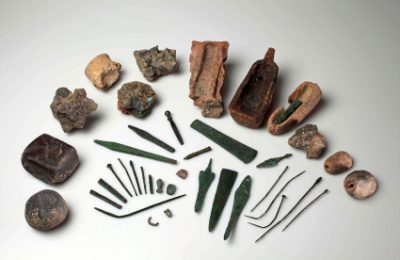
Austria's Der Standard published an article on HEAS's own Mathias Mehofer's research on the metallurgy at the Cukurici Höyük. Full Story, in German, below: https://www.derstandard.at/story/2000138691196/das-grosse-netzwerk-der-metallurgen-vom-cukurici-hoeyuek Check out the original research in the Open Access book Çukuriçi Höyük 3 For general information on Mathias Mehofer´s work see: https://vias.univie.ac.at/en/research/archaeometallurgy-and-archaeometry/projects/  

Read More